
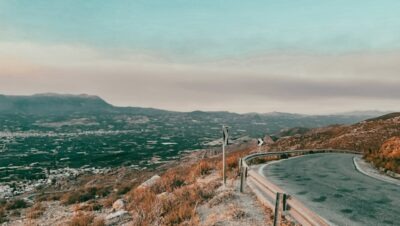
If you think of the plotline of the novel as a geography, some of them are full of hills and dales and others are as flat as Florida. Lets call “hills” the moments of suspense, fear, or angry confrontation that spice up the horizon. “Flatlands” would be the emotionally level parts where the story chugs along. The best plots have both features, so we can’t call one better than the other—but if I only got one of them, I’d want it to be the Alps! Because a uniformly flat vista, with no tension or bursts of action might well become deadly boring. And to put a more subtle point on it, even a plot with a too-uniform pattern of identical hills starts to look like an electrocardiogram. Excellent at the doctor’s, but a bit ho-hum on the pages of a book. Let’s take a closer look.
Death Valley
Low spots have their uses. This is where backstories are told, characters move from scene to scene, or we see what they’re planning to do or how thay are reacting. Maybe they’re dreaming of that handsome guy they just met but who is so distant. Maybe the detective is mulling the evidence. Perhaps the roving warriors have left one battle and are on the road to the next. Such moments need to last long enough to accomplish their purpose, but let them drag on at yor own risk. Always, they should serve the interests of the plot or at least help deepen a character or set a scene. They are not nothing. Some books have more flatlands than others, and these “Florida” books can still be charming and worthwhile (looking at you, Barbara Pym), but they won’t raise the reader’s blood pressure.
Them Thar Hills
Most books, especially genre books, need the addition of high places to get the pulse racing. You could probably outline the story by just listing these moments where things Happen with a capital H. Think of a mystery or a police procedural: the case leaps ahead irregularly by different moments of discovery. There’s the forensics. The testimony of a witness. The discovery of a suspicious coincidence. Maybe somebody even attacks the investigator. These are not only the peaks along the way of solving the murder, but also the jolts that keep the reader engaged in the book.
Varied Topography
In a good novel, even these peaks are never too predictable or uniform in height. Otherwise, we risk the EKG effect. Is your detective gathering clues? Let her also find out a few things through less controlled means. Maybe a dying jailbird wants to spill an old story. Or a witness who has been silent comes to see her. Or, again, she sees something happening and wonders if it has anything to do with her case. Then there’s that attack. Let it be a big scene that blows everything out of the water—a regular Mt. Everest that upends the case. Just don’t make each revelation the result of the same kind of plodding procedural questions. Real life may be like that, but real life can be boring. If you graphed your plot topography, it should be varied and irregular.
A special word here about journey books (think of Lord of the Rings). They’re generally an array of incidents strung together by travel time. They can be successful, but there has to be strong variety, with occasional big peaks of intensity or else they can become a landscape of ennuie.
Here are a few ideas to consider as you read and especially well?
