My work is primarily traditionally published, and I’ve worked with a number of editors at several small, medium-sized and large publishing houses (think Random House, Houghton Mifflin Harcourt). Each editor has his/her/their way of working with an author. Over the years I’ve learned that if I can meet their needs a good portion of the time the whole process moves along pretty smoothly.
Of course, there may be the unexpected catastrophe—an imprint folds, and editor leaves and your manuscript is temporarily orphaned until it’s assigned to someone else (who may/may not have the same enthusiasm for it as the original editor), etc. These kinds of issues aside, I’ve learned that it helps to be as flexible as I can. But not always.
There are times when I must stand my ground on an issue/concern. However, it’s never good to make a mountain out of a molehill. And it’s important not to consider every word of a manuscript as sacrosanct. I always feel I am learning. And, yes, there are often times when some change will better my work. Part of my job is to realize that and not get my hackles up because an editor wants a change. So, my comments in this post are from my background as a traditionally published author.
I remember one writer friend who contacted me very upset because her editor was suggesting too many changes to her picture book manuscript. When I looked at it for her, I discovered there were only twelve suggested edits—far fewer than I’ve traditionally seen in the business. I calmed her down and we went through them—discussing each. It turned out there was only one that was essential to the theme/tone/plot. That one she held her ground on. The book was a hit.
Making a good first impression
But, let’s back up. Well before we get to the developmental editorial letter stage it is helpful if you can show an editor that you are willing to work with him/her/them. This starts as early as the original submission. First, if you are not represented by an agent and are submitting your manuscripts yourself, do you understand the submission guidelines and adhere to them? Most publishing houses have spent a great deal of time honing those and the guidelines work for them. If you blatantly disregard the guidelines your submission is likely to be dismissed. Following the guidelines is the first indication that they may be able to work with you.
The dreaded editorial (developmental) letter:
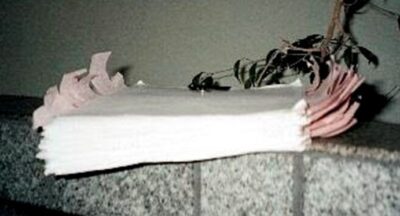
Ok! Let’s say you’ve gotten an offer from a traditional publishing house. You’ve accepted it and sometime later (often months later!) you get that much-anticipated—and often feared developmental/editorial letter. The editorial letter on my first novel was several pages long and single-spaced! In addition, there were several hundred sticky notes attached to pages with notations on them. (Please see the photo for proof of this!) My best advice: take a deep breath. Put the letter and your manuscript away for a week, or two, or more. When you can’t stand it any longer, pull it out and go through the letter, or sticky notes, point by point.
You will most likely experience some DUH! moments. That is, some wise advice at which you slap your forehead and wonder, why didn’t I think of that? Of course! This is good—you and your editor are on the same page as to the direction the book should go. Then there will be those suggestions/questions/urgings that you’re not sure about. And there will be a few no way suggestions. The hardest to work your way through will be the wishy-washy ones that you could be swayed to agree with one day, and not the next day. These take the most time percolating and are often worked through by appealing to your fellow writers/critique partners for their opinions.
Address the underlying problems
It’s important to remember that if you’re not sure something an editor suggests will work, talk to her/him/them about it. Ask for clarification, what is the underlying problem that the editorial suggestion is trying to solve?
I once had a picture book in rhyme for which the editor made several line change suggestions. The problem was that the lines didn’t really jive with the meter, or scan with the other lines. What I did was to go through and ask. What are you trying to fix at this point? What is the problem you are addressing at this point? When she replied to each of my questions I then made two suggested changes at each point that addressed whatever the underlying problem was. I told the editor she could pick one of my two changes because they each matched the meter, and the poem’s form, as well as addressed the problem. This worked well and we cleared up all the concerns she had—using my changes.
As to the no way suggestions—the ones that you would fight to the death for—make them as few as possible. Really think out what is critical to the story and MUST remain as is. If your mystery novel hinges on a newly discovered long-lost Vermeer and your editor suggests you make that an Edward Hopper because there is a big Hopper anniversary soon with a traveling retrospective—do it! Unless it is critical that the found/stolen painting be a Vermeer for some reason. If a change doesn’t matter one way, or another, I suggest going with an editor’s want. You’ll make them happy and easier to work with when you really insist on the few items that absolutely cannot be changed.
Good editors seldom make outright demands
Note, I have been using the word suggestion(s) throughout this post. And that is how I view editorial letters. Most good editors see the process as a team effort, and they ask questions. Why is the lost Vermeer discovered in a Midwest farmhouse and not in a New York penthouse? Why is the pet in the story a lizard? Simply answering these will often serve to clarify things about your manuscript for your editor. Sometimes, that is all that is needed, and no changes (or very few) must be made.
Editors are there to help polish your manuscript and make it as attractive to readers as possible—it is a collaboration. One should never see an editor as an enemy—nor be personally insulted by being asked to make changes. If that’s the case, turn down the offer, go elsewhere. Good editors are worth their weight in diamonds.
Resources:
- Sample developmental editorial letter: https://mastersreview.com/editorial-letter-example
- What Does an Editor at a Publishing House Do: https://www.youtube.com/watch?v=qJAv191emxA

Brenda Hargroves
Excellent article!
J. K. Amerson López
This is such good, specific advice! My publisher had a very light touch, but I know it will be different with the next book. Thanks for the tips.